How to Choose the Right Technology for Business: A Practical Guide for Growing Companies
Technology is now a part of every business. From websites and software to applications, business platforms, analytics and digital marketing companies have options now than ever before.
Having options does not always make the decision easier.
A business may invest in software yet still rely on spreadsheets. A website may look modern yet bring enquiries. Different systems may operate separately forcing employees to move information from one tool to another.
That is why choosing technology for a business should start with the business itself. This approach keeps the focus on the business.
The right solution should solve a problem support the people using it improve customer experiences or create a foundation for growth. Technology should solve problems.
Technology Should Solve a Business Problem
Technology should have a purpose. Whether the goal is to reduce work improve communication, simplify operations or support growth the solution should address a business need.
Before comparing software, platforms or development options businesses need to understand what is happening today.
Start With the Problem
Start with the problem not with technology.
Ask:
What tasks are taking a time?
Where are mistakes happening?
What are customers finding difficult?
Which processes are becoming harder to manage?
What is preventing the team from working?
A company may think it needs software when the real issue is a process. Another business may think it needs advertising when its website makes it difficult for visitors to understand its services.
Understanding the problem makes it easier to find technology solutions for a business that address the underlying need. Understanding the problem helps find the technology.
Understand Your Current Process
Before adding technology look at how work's currently done.
Where does information enter the business? Who handles it? Where is it stored? How does it move between teams? What happens when a customer asks for an update?
Mapping the process can reveal:
Repeated tasks
Manual data entry
Unnecessary approvals
Disconnected systems
Communication gaps
Opportunities for automation
This gives the business a picture of what its technology needs to accomplish. Mapping the process reveals what technology truly needs.
Define What Needs to Improve
Once the problem and the current process are understood, define the expected improvement.
This could mean:
Reducing work
Improving response times
Organising business information
Improving customer experiences
Supporting communication
Increasing visibility
Managing a growing team
The desired outcome makes it easier to evaluate technology options. A business will find it easier to evaluate options once the desired outcome is known.
What Does Your Business Need?
Not every business needs the same type of technology.
One business may need a website while another may need custom software. A growing team may need employee management tools while a product‑focused company may need an application or digital platform.
The right choice depends on the business requirement.
A Better Website
For a business the website is at the centre of its presence.
A business website should help visitors understand what the company offers find information trust the brand and take the step.
A clear website builds trust.
If the current website is outdated, difficult to navigate, slow or unclear rebuilding it may provide value than adding another tool.
A planned website can also support SEO, content marketing, lead generation and customer engagement.
Business Software
Business software can help an organization manage operations, information, workflows, customers, employees, reporting and other everyday activities.
Ready‑made software can work well when existing platforms already meet the business requirement.
However companies with workflows may need software built around their processes.
Business software solutions therefore range from ready‑to‑use platforms, to systems designed around the business requirement.
A Web Application
A web application can provide functionality beyond a website. A web application expands what a simple site can do.
It can allow customers, employees, partners or administrators to log in access information, complete tasks, submit data and manage activities online.
It can be useful when a business needs a platform without requiring users to install an application.
A Mobile Application
Mobile applications can provide customers and employees an experience whenever they use a device to interact with a business.
They may support:
Customer services
Bookings
Orders
Communication
Employee activities
Digital products
Account management
A mobile application is useful when it gives value that a normal website cannot give. I believe that a mobile app creates an experience.
When a business grows, handling everything with spreadsheets, emails, documents and messages can become increasingly difficult for a business.
Business management tools can move chosen processes into a setting that supports:
Operations
Team coordination
Information management
Workflows
Business administration
Reporting
The right technology can reduce work and give teams time to focus on their main duties for a business.
Sometimes the need goes beyond improving an existing process for a business.
A company might have an idea for a platform, SaaS product, customer application or a digital solution that fits an industry for a business.
Product development can turn that idea into a product by planning, designing, developing, testing and improving for a business.
A custom digital product can help when existing tools cannot meet a business need adequately for a business.
Custom Software vs Ready‑Made Solutions
One of the tech decisions a business faces is whether to use a product or build something made for a business needs.
There is no answer. The best choice depends on a business.
Ready‑made software can be suitable when:
The business has defined requirements
Existing software provides the features
Employees can adopt the workflow easily
Integration requirements are manageable
Extensive customisation is not needed
For a business, this can be a way to bring technology into use without building everything from the start.
Custom software may be worth considering when a business has:
Unique workflows for a business
Special requirements
Specialized user needs
Complex processes
Integration needs
A need for control over functionality
Custom software is not about making technology. It is about making technology fit a business better for a business.
A business does not always have to pick one approach for a business
A company might use ready‑made software for tasks while using custom software or integrations for needs for a business.
This can build a technology environment without needing to develop every function from the start for a business.
Signs Your Business Has Outgrown Its Current Technology
Technology that worked well when a business was small may not work well after the company grows for a business.
If employees spend a lot of time entering, copying, checking or moving data by hand the current system may need improvement for a business
When teams use tools that do not talk to each other information can be hard to find, update and keep up for a business
Entering information into multiple systems increases workload and creates opportunities for errors for a business
If customers must repeat data wait long or switch between channels that do not connect technology may need attention for a business
A business needs information to see what is happening for a business
For some organisations this may include dashboards or business intelligence programs that gather data for analysis and reporting for a business.
A solution that works for ten users may not work well for a hundred for a business
If performance, function, user access or administration becomes harder as a business grows scalability must be part of the technology discussion for a business.
What to Consider Before Choosing a Technology Solution
Choosing technology involves more than comparing features for a business.
Technology should be practical for the people who use it. A system with many features can still cause problems if employees find it hard to understand for a business
Think beyond today’s needs. Consider whether the solution can support users, customers, data, services or places as a business grows for a business
Security
Business systems may handle customer information, employee details, financial information and other sensitive data. Security must be considered from the beginning, for a business
Integration
A new solution should fit into the technology environment wherever possible. Good integration can cut repeated data entry. I want different systems to work together for the business.
Maintenance
Technology needs attention. Updates, improvements, troubleshooting, security and technical support should be considered when evaluating a technology solution for the business.
User Experience
Whether the users are customers or employees technology should make interactions clear, convenient and efficient for the business.
Technology and Digital Marketing Should Work Together
Technology and digital marketing are often treated as activities but they can support the business goal for the business.
A company might build a website use SEO to help people find it create content to answer their questions generate leads through campaigns and use customer management systems to organise those opportunities for the business.
The journey can look like this:
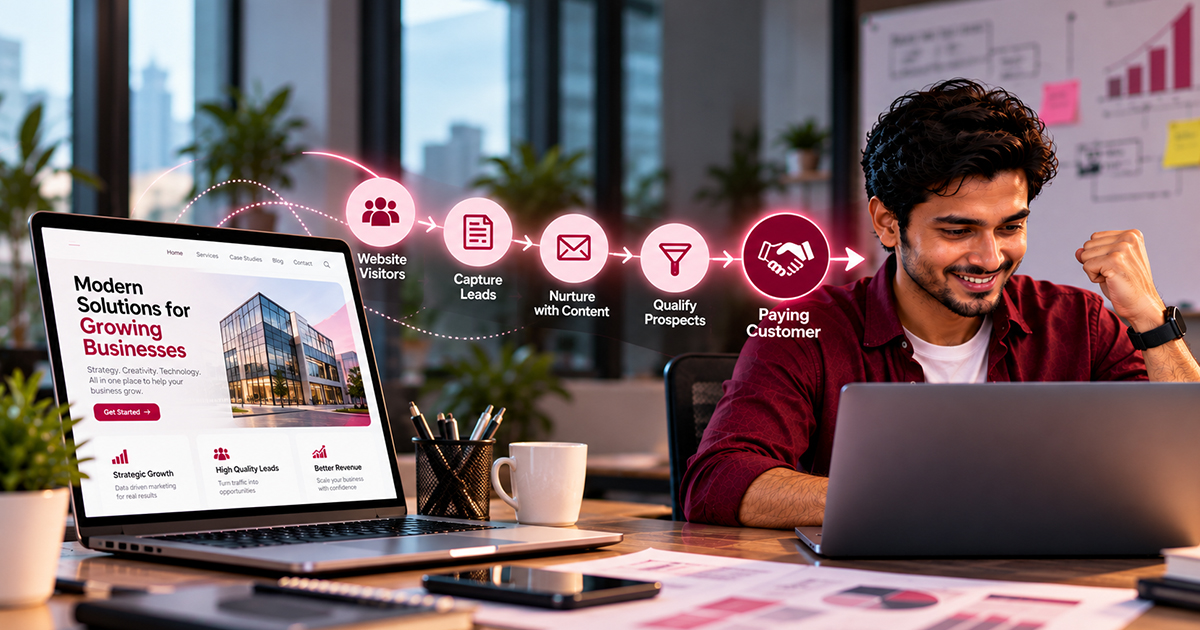
Website → SEO → Content → Leads → Customer Management → Analytics
Each stage supports the one.
A website provides the foundation. SEO helps people find it. Content builds understanding and trust. Lead generation turns interest into opportunities. Customer management organizes those opportunities while analytics shows what works.
For businesses that run advertising ad‑tech solutions can also support campaign delivery audience targeting, tracking and performance measurement.
Technology and marketing become more useful when they work toward the business goal.
Common Technology Mistakes Businesses Make
Technology can create value. The wrong approach can add complexity.
Choosing Technology Before Identifying the Problem
Starting with a tool. Then trying to fit it to the business can lead to unnecessary technology. Always begin with the business need.
Buying Disconnected Tools
Adding tools for every small task can make the technology environment complicated. More tools do not necessarily mean processes.
Ignoring Users
Technology is ultimately used by people. If employees or customers find a system confusing or difficult adoption can become a problem no matter how many features it offers.
Thinking About the Initial Build
Launching a website, application or software system is one stage. Businesses should also plan for updates, support, security and future improvements.
Forgetting Scalability
A solution should be evaluated against requirements. Technology that cannot grow with the business may eventually become a limitation.
Not Planning for Maintenance
Every digital system needs some level of care. Planning for maintenance from the beginning can make future improvements easier to manage.
A Simple Framework for Choosing the Right Technology
Businesses do not need a process to make better technology decisions. A simple framework can help:
Understand → Define → Compare → Build/Choose → Implement → Measure → Improve
Understand
Look at the business its processes, users, challenges and goals.
Define
Turn those findings into requirements. What must the solution do? Who will use it? What should improve after implementation?
Compare
Consider approaches than immediately choosing the first option. Compare functionality, usability, scalability, integration, security, maintenance and long‑term suitability.
Businesses evaluating consulting tech companies can use these criteria when comparing technology partners.
Build or Choose
Decide whether a ready‑made product, a solution, an integration or a new digital product is the approach.
Implement
Introduce the solution in a way that makes sure the people using it understand how it works.
Measure
Check whether the solution is delivering the expected improvement.
Improve
Technology should evolve as business requirements change. Reviewing and improving the solution over time can help it remain useful as the business grows.
How Digitiz Helps Businesses Build the Right Digital Foundation
Choosing technology is the beginning. The next step is to turn the requirement into something that works in the world.
As a tech solutions company Digitiz brings technology services, digital solutions, product development and digital marketing together to help businesses build and strengthen their foundation.
Software Development
Digitiz develops software around business requirements, processes and operational needs.
Website Development
Digitiz develops websites, around business goals, user experience, functionality and digital growth requirements.
Application Development
For businesses that need platforms or dedicated digital experiences application development can support customer‑facing and internal requirements.
Product Development
Businesses with a product idea can work through planning, design, development, testing and improvement to turn the idea into a solution.
Digital Solutions
Digital solutions can help businesses simplify processes, connect systems manage information and improve operations.
These can include automation, HRMS solutions, business management tools, system integration and other digital requirements.
Digital Marketing
Technology creates the foundation. Businesses also need to reach the people they want to serve.
Digitiz offers marketing services that can help with search engine optimisation, social media marketing, content marketing lead generation paid campaigns and analytics.
For example a construction company may need project management software for construction to improve project workflows. Another business might need a customer application, an HRMS or customised software.
Technology should follow the requirement, not the way
Frequently Asked Questions
How do I know what technology my business needs?
Start by identifying the business problem understanding the process and defining what needs to improve. The right technology should support those requirements.
What are technology solutions for businesses?
Technology solutions can include websites, software, applications, business management tools, automation systems, integrations, analytics platforms and custom digital products.
Should a small business use ready‑made software or custom software?
The decision depends on the business. Ready‑made software can work well for requirements while custom software may be better when workflows or requirements are highly specific.
When should a business consider custom software?
Custom software may be worth considering when existing solutions cannot effectively support processes, specialised requirements, integrations or user needs.
Does every business need an application?
No. A mobile application should have a purpose. Provide enough value to justify its development and maintenance.
What should businesses consider when choosing business software solutions?
Businesses should consider usability, scalability, security, integration, maintenance, functionality, user requirements and long‑term suitability.
How important is scalability when choosing technology?
Scalability matters because business requirements can change. A solution that cannot support users, data, processes or customers may eventually become a limitation.
Can Digitiz develop custom technology solutions?
Yes. Digitiz provides software development, website development, application development, product development and digital solutions based on business requirements.
Final Thoughts
Choosing technology should never be about having the tool or the largest collection of systems.
It should be about finding what genuinely helps the business work better.
Start with the problem. Understand the process. Define what needs to improve. Then consider the technology that can support that goal.
Sometimes the answer may be a website. Sometimes it may be business software, an application, a management tool or a custom digital product.
For industries, the requirement may be more specific. A construction company, for example, may need project management software for construction. Another company may need a customer platform, analytics system or customised business software.
There is no one‑size‑fits‑all technology checklist for every business.
The right technology, for business is the technology that fits the business supports its people serves its customers and leaves room for what comes.
At Digitiz, the approach is simple:
Know the need. Build the solution. Help the business move forward.